Content Menu
● How a Diesel Fuel Injection System Works
● Essential Diesel Fuel System Components Explained
>> Fuel Tank and Fuel-Level Sending Unit
>> Fuel Supply Pump or Lift Pump
>> Common Rail
>> Fuel Filter, Strainer, and Water Separator
>> ECU, Pressure Sensor, and Metering Valve
>> Return Line and Injector Leak-Off
● Fuel System Specifications Buyers Should Understand
>> Injection Timing and Multiple Injections
● A Practical Diagnostic Sequence Before Replacing Parts
>> 1. Confirm the Application and Complaint
>> 2. Check Fuel Quality and Low-Pressure Supply
>> 3. Compare Requested and Actual Rail Pressure
>> 4. Test Pump Performance and Injector Return Flow
>> 5. Investigate the Root Cause
>> 6. Verify the Completed Repair
● How to Evaluate Diesel Injector and Fuel Pump Suppliers
>> Build an Application-Matching File
>> Request Meaningful Test Evidence
>> Separate Quality Systems From Product Approval
● Diesel Injector Repair Kits: What They Can and Cannot Do
● Working With Diselon on Diesel Fuel System Requirements
● Specify the Right Components Before You Order
>> What is the difference between a fuel pump and a fuel injector?
>> Does low rail pressure always indicate a failed pump?
>> Do replacement diesel injectors always need coding?
>> Can an injector be selected by appearance alone?
>> Can a repair kit restore every faulty injector?
>> Why can a replacement injector fail again?
Understanding fuel system terminology helps you choose the right diesel injectors, fuel pumps, and repair parts. For workshops, distributors, and equipment owners, these terms are more than technical vocabulary. They influence compatibility, diagnostic accuracy, and the long-term reliability of a repair.
At Diselon Fuel Syetems (Dongguan) Co., Ltd., we recommend evaluating components as parts of a complete system rather than isolated replacement items. A new injector cannot resolve contaminated fuel, and a replacement high-pressure pump cannot compensate for an inadequate fuel supply.
This guide explains essential diesel fuel system components, common specifications, and practical questions to ask before ordering.
How a Diesel Fuel Injection System Works
A diesel fuel system stores, filters, pressurizes, and meters fuel for combustion. In a common-rail system, pressure generation and injection control are separated.
The simplified fuel path is:
Fuel tank → supply pump, where fitted → filtration → high-pressure pump → common rail → injectors.
Return circuits carry designated leakage and surplus fuel back through the system. Exact layouts vary, including filter locations and whether the supply pump is separate or integrated.
Two operating circuits are especially important:
- The low-pressure circuit supplies clean fuel to the high-pressure pump.
- The high-pressure circuit supplies pressurized fuel for injection.
This distinction matters during troubleshooting. Low rail pressure does not automatically mean the high-pressure pump has failed. Restricted filtration, insufficient supply, or excessive injector return flow may also contribute.
Essential Diesel Fuel System Components Explained
Fuel Tank and Fuel-Level Sending Unit
The fuel tank stores fuel. The sending unit measures fuel level and communicates that information to the dashboard or control system.
Despite its name, a sending unit does not pump fuel.
When investigating contamination, inspect the tank and supply circuit rather than focusing only on engine-mounted components.
Fuel Supply Pump or Lift Pump
A lift pump moves fuel toward the high-pressure pump. Depending on the application, it may be electrically driven, mechanically driven, or integrated into another assembly.
Its job differs from that of the injection pump. Adequate supply pressure and volume help the high-pressure stage operate correctly.
High-Pressure Fuel Pump
The high-pressure fuel pump raises fuel pressure for delivery to the rail.
In a common-rail system, it generates pressure; electronically controlled injectors determine when fuel enters each cylinder.
Some Bosch common-rail systems operate at pressures up to 2,500 bar. That figure describes particular system designs, not a universal operating target or replacement-part specification.
Always match the pump to the engine application and approved operating requirements.
Common Rail
The common rail is a high-pressure accumulator connecting the pump and injectors. It maintains a pressurized fuel supply available for injection.
Rail assemblies may incorporate a pressure sensor, pressure-control hardware, or a pressure-limiting device. The configuration depends on the system.
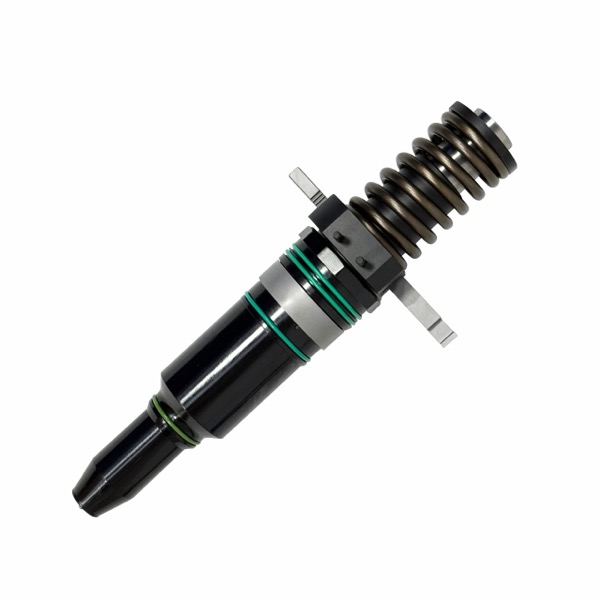
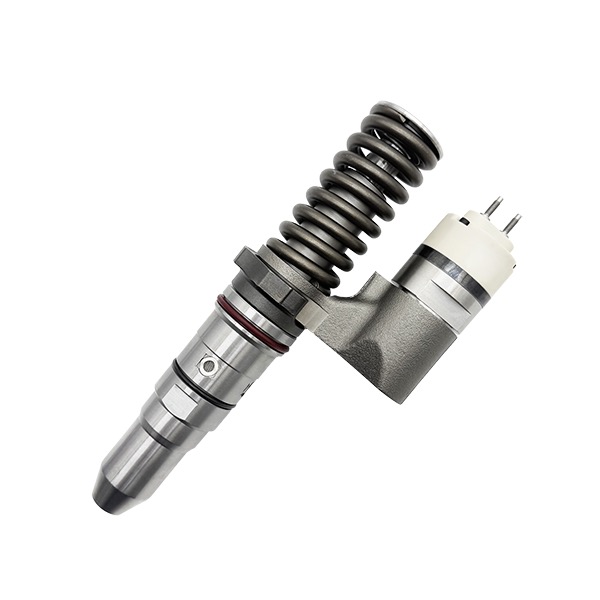
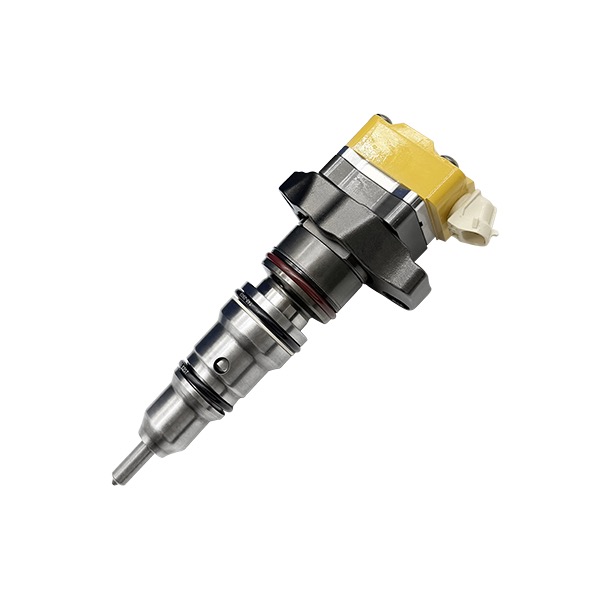
Diesel Fuel Injector
A diesel injector meters fuel and delivers it through a precisely engineered nozzle into the combustion chamber.
Common-rail injectors use electronically controlled actuation, including solenoid or piezoelectric designs. These technologies are not automatically interchangeable.
Compatibility depends on hydraulic characteristics, electrical control, nozzle design, and application-specific calibration—not simply whether the injector fits physically.
Fuel Filter, Strainer, and Water Separator
These components protect different parts of the fuel supply:
| Component | Main function | Selection consideration |
|---|---|---|
| Strainer | Screens relatively large debris | Correct inlet fit and application |
| Fuel filter | Removes finer particulate contamination | Required filtration performance |
| Water separator | Separates water from diesel fuel | System design and servicing requirements |
Some filter assemblies combine filtration and water separation.
Avoid choosing a filter by thread size alone. Housing compatibility does not prove that filtration performance meets the engine’s requirements.
ECU, Pressure Sensor, and Metering Valve
The engine control unit, or ECU, coordinates injection using sensor inputs and programmed control strategies.
The rail pressure sensor reports measured pressure. A metering valve controls fuel delivery into the pump on systems using that arrangement.
Terms such as suction control valve, inlet metering valve, and fuel metering unit appear across different manufacturers. Similar names do not guarantee identical functions or interchangeability.
Return Line and Injector Leak-Off
A return line carries designated fuel flow away from components.
Injector leak-off, also called back leakage or return flow, is part of many injector designs. Excessive leakage can reduce available rail pressure.
Return flow must be assessed against the relevant test conditions and limits. Neither “no return” nor “some return” is a universal pass-or-fail rule.
Fuel System Specifications Buyers Should Understand
Pressure Versus Flow Rate
Pressure describes hydraulic loading. Flow rate describes fuel volume delivered over time.
A pump’s advertised flow rating has limited value without its test conditions. Buyers should ask about operating pressure, electrical voltage where applicable, fluid temperature, and the test method.
A free-flow rating should not be treated as the delivery available under operating pressure.
Bar, MPa, PSI, and LPH
Common specification terms include:
| Term | Meaning | Typical application |
|---|---|---|
| Bar | Pressure unit | Rail and pump specifications |
| MPa | Megapascal, another pressure unit | High-pressure system data |
| PSI | Pounds per square inch | Pressure measurements |
| LPH | Liters per hour | Pump delivery |
| mm³/stroke | Cubic millimeters per stroke | Injector delivery measurements |
One MPa equals 10 bar.
When comparing injector reports, confirm the measurement basis. Results expressed per stroke cannot be directly compared with results expressed per minute without additional information.
Injection Timing and Multiple Injections
Injection timing describes when injection occurs relative to engine position.
Depending on the system and operating conditions, a combustion cycle may include pilot, main, and post-injection events. These strategies support different combustion, noise, and emissions objectives.
This explains why maximum flow alone cannot establish injector quality. Performance across the specified operating points matters.
Injector Correction Codes
Correction codes describe individual injector characteristics established through testing.
Depending on the manufacturer, terminology may include IMA, IQA, C2I, or C3I.
On applications requiring coding, the correct code must be entered into the appropriate cylinder position in the engine management system. Coding does not repair a defective injector or make an incompatible injector suitable.
A Practical Diagnostic Sequence Before Replacing Parts
Hard starting, unstable idle, reduced power, and pressure-related fault codes are diagnostic clues—not final component diagnoses.
We recommend a structured investigation before approving replacement.
1. Confirm the Application and Complaint
Record the engine identification, operating conditions, fault codes, and recent repair history.
Clarify whether the problem occurs during cold starting, hot restarting, acceleration, or sustained load. Different conditions can reveal different faults.
2. Check Fuel Quality and Low-Pressure Supply
Inspect for contamination, water, restricted filtration, supply problems, and relevant electrical faults.
Address inadequate low-pressure delivery before judging high-pressure pump performance. Otherwise, a healthy pump may appear defective because it is not receiving sufficient fuel.
3. Compare Requested and Actual Rail Pressure
Use suitable diagnostic equipment and application-specific procedures.
A pressure difference can help direct further testing, but it does not identify the failed component by itself.
4. Test Pump Performance and Injector Return Flow
Qualified technicians can use approved pressure-testing and back-leak equipment to distinguish pump-delivery problems from excessive leakage.
Use manufacturer-specific limits. Avoid applying one engine’s starting-pressure requirement or leak-off limit to another system.
5. Investigate the Root Cause
If contamination is present, determine its source and follow the relevant system-cleaning and component-replacement procedure.
Replacing injectors alone while leaving contamination elsewhere creates a substantial risk of repeat failure.
6. Verify the Completed Repair
Complete required coding, priming, fault-code checks, and operating verification.
High-pressure safety is essential. Follow the manufacturer’s depressurization procedure and verify residual pressure before opening the system. Never loosen a pressurized connection or use your hand to search for a leak.
How to Evaluate Diesel Injector and Fuel Pump Suppliers
For B2B purchasing, a useful quotation should resolve technical uncertainty rather than simply present a price.
Build an Application-Matching File
Provide suppliers with:
- Original part numbers and clear identification photographs.
- Engine model and equipment application.
- Relevant serial-number or production variations.
- Electrical connector and mounting details.
- Required quantity and expected annual demand.
- Whether you need new components, repair parts, or another clearly defined product condition.
Cross-reference lists are useful starting points. Final suitability should be confirmed against the exact application.
Request Meaningful Test Evidence
For diesel injectors, ask which operating points are tested and whether results cover delivery, return flow, and leakage.
For fuel pumps, ask which pressure and delivery conditions are verified.
Also clarify:
- Whether reports are individual or batch-based.
- How reports connect to product identification.
- Which acceptance limits apply.
- Whether correction-code generation is relevant.
- How nonconforming products are controlled.
“Tested before shipment” is less informative than a defined test procedure with traceable results.
Separate Quality Systems From Product Approval
A supplier’s management-system certification provides useful organizational context. It does not establish that every component is approved for every engine.
Buyers should review certificate scope and validity alongside application matching, inspection records, and product-specific evidence.
Diesel Injector Repair Kits: What They Can and Cannot Do
Repair kits may contain seals, washers, control-valve parts, or other components, depending on the injector design and kit specification.
A kit is not automatically a complete repair solution.
Before ordering, confirm:
- The exact injector reference.
- Every included component.
- Parts that require separate replacement.
- Required assembly tools and cleanliness controls.
- Post-repair testing and calibration requirements.
Replacing an external seal does not correct internal wear. Likewise, replacing internal components without suitable testing does not demonstrate that delivery and leakage meet specification.
Where calibration capability is unavailable, a verified complete injector may be more practical than an uncertain rebuild.
Working With Diselon on Diesel Fuel System Requirements
Diselon Fuel Syetems (Dongguan) Co., Ltd. develops, manufactures, and supplies diesel injectors, fuel pumps, repair kits, and related accessories.
According to our company information, our capabilities are supported by:
- More than 20 years of fuel injection industry experience.
- A production base exceeding 7,000 square meters.
- ISO 9001 and IATF 16949 quality management systems.
- Advanced testing equipment and technical support for international B2B customers.
Our recommended starting point is a clear technical requirement. Share the application, part reference, quantity, and documentation needs so that product suitability can be discussed before ordering.
Specify the Right Components Before You Order
Reliable sourcing starts with accurate identification and ends with verified performance.
Contact Diselon with your injector or fuel pump reference, engine application, order quantity, and testing requirements. Request an application review, a clearly defined quotation, and confirmation of the documentation available for your selected products.
Frequently Asked Questions
What is the difference between a fuel pump and a fuel injector?
A fuel pump moves and pressurizes fuel. An injector meters and sprays fuel into the engine. In common-rail systems, pressure generation and injection control are separate functions.
Does low rail pressure always indicate a failed pump?
No. Restricted filters, inadequate supply, control faults, and excessive injector leakage can also contribute. Diagnosis should establish the cause before replacement.
Do replacement diesel injectors always need coding?
Not universally. Requirements depend on the injector and engine management system. Where coding is specified, enter the correct injector code and cylinder position using suitable equipment.
Can an injector be selected by appearance alone?
No. Similar-looking injectors may differ in nozzle geometry, control characteristics, delivery, and calibration. Confirm the part reference and application.
Can a repair kit restore every faulty injector?
No. Suitability depends on the damage, serviceability, available parts, and testing capability. Some injectors require complete replacement.
Why can a replacement injector fail again?
Unresolved contamination, incorrect installation, application mismatch, or another system fault may cause repeat problems. Investigate the original failure rather than replacing parts without verification.
References
1. Quantum Fuel Systems. “Fuel System Terminology: Learn About All Fuel System Components.” Posted July 27, 2022. Original article reviewed for the terminology framework and content-gap assessment. Read the original article.
2. Bosch Mobility. “Common-Rail System With Solenoid Injectors.” Technical source for separation of pressure generation and injection, rail operation, and system-specific pressures up to 2,500 bar. View the technical overview.
3. Bosch Mobility. “High-Pressure Pump for Common-Rail Systems.” Technical source for pump operation, demand-based metering, low-pressure supply, and return connections. View the pump description.
4. Delphi. “Hard or Non-Start Problems Due to Fuel Injection System.” November 29, 2022. Supports the diagnostic sequence covering low-pressure supply, high-pressure testing, and injector back leakage. Application-specific numerical thresholds have not been generalized in this article. Read the diagnostic guidance.
5. Delphi. “How to Diagnose Typical CRI Faults on a Ford Mondeo 2.0 TDCi.” May 9, 2022. Supports contamination investigation and the risk of repeat failure when contaminated systems receive injector-only repairs. Read the application-specific guidance.
6. Delphi. “How to Program and Replace a Common Rail Injector?” May 11, 2022. Supports injector correction-code terminology, cylinder-specific programming, part-number checks, and installation verification. Read the programming guide.
7. Delphi. “How to Remove and Replace a Diesel Common Rail Injector.” May 4, 2022. Supports residual-pressure verification, cleanliness precautions, protective caps, and correct installation procedures. Read the replacement guide.
Hot Tags: Diesel Fuel Injectors, Diesel Fuel Pumps, Common Rail Injectors, High-Pressure Fuel Pumps, Diesel Fuel Injection Systems, Fuel Injector Repair Kits, Diesel Injector Manufacturers, Diesel Fuel Pump Suppliers, Common Rail Injector Parts, Diesel Fuel System Components